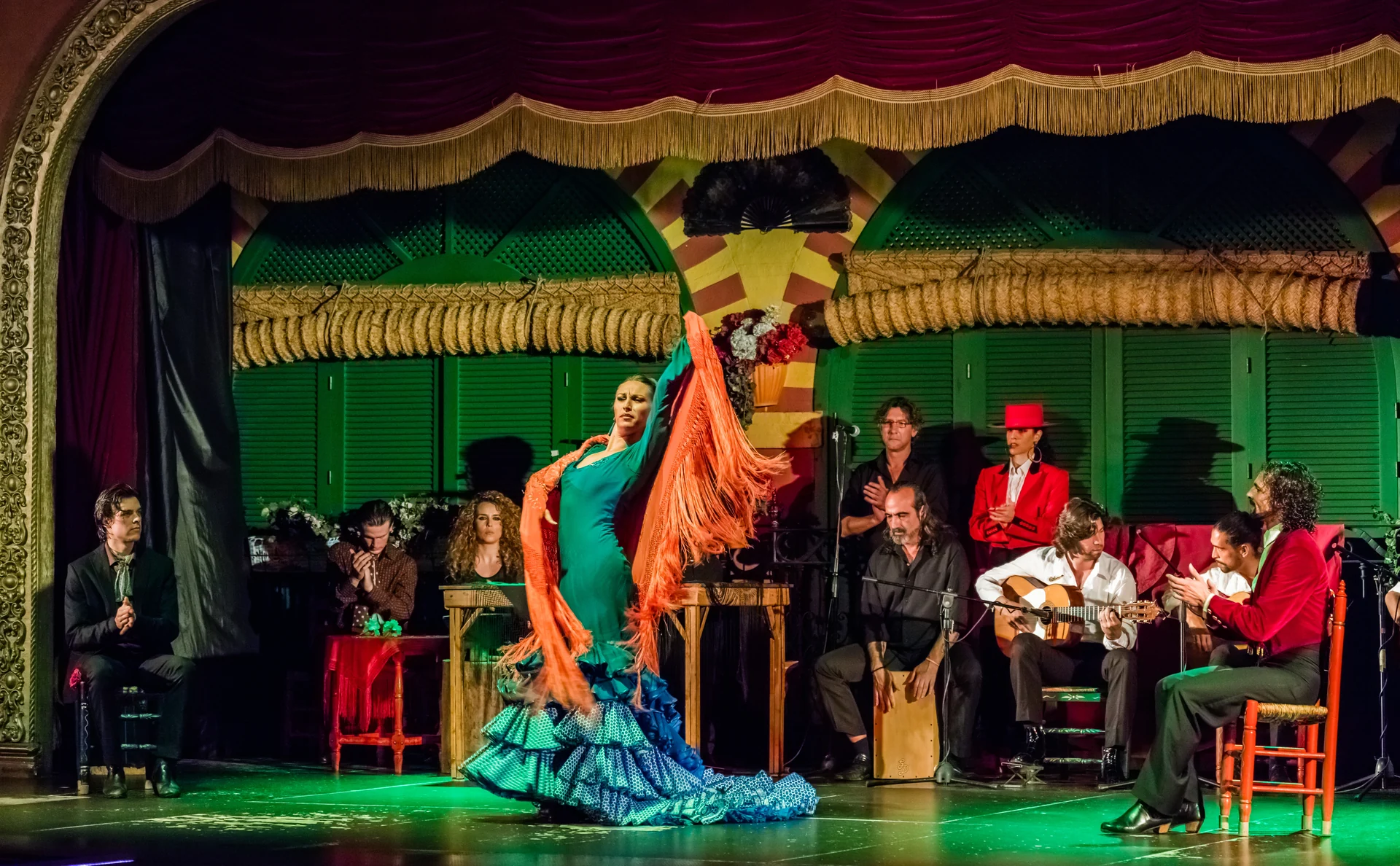
Read the event as well as the venue
A venue label is useful shorthand, but it cannot describe every performance held there. A small room may host a singer-focused recital one night and a mixed ensemble another. A theatre can present a touring production or a shorter recurring show.
Use the setting to frame practical questions: How close might the seating be, is food involved, is the event part of a wider cultural programme, and how will you get there? Leave judgments about artistic quality until you have evidence about the actual performance. The categories below help you compare experiences without turning a room type into a league table.
Tablao: A venue organised around live shows
For a visitor, a tablao commonly means a dedicated venue offering ticketed flamenco performances. The stage, audience arrangement and hospitality are part of its identity. Some businesses offer dinner or drinks; others centre the purchase on the performance. There can be considerable differences between programmes and seating policies, so check the specific venue rather than assuming a standard package.
This can suit a traveller who wants a clearly bookable event within a city itinerary. Compare the show-only option with any extras, and establish whether a published artist list applies to your date. An intimate setting may appeal to you, but closeness is only one factor: Sightlines, comfort and the way the room is arranged also matter.
Peña: An association and its cultural activity
A peña flamenca is an association of people interested in flamenco. Its life can include recitals, discussion, learning and other cultural activities. The Andalusian government's account of the peña network highlights its role in bringing audiences together and creating opportunities for performers. An association may have a venue, but the word peña describes the community and organisation as much as the room.
If this setting interests you, look for a named public event and its entry arrangements. Check whether visitors can attend, whether booking is required and whether the information applies to the current programme. Do not arrive expecting a nightly tourist show simply because an address appears online. A well-documented public recital can provide an interesting encounter with local cultural activity, while still requiring the same practical checks as any other event.
Theatre: Follow the named production
A theatre programme often leads with an artist or production title. That title matters: A dance work, a singer's recital and a guitar concert can create quite different evenings. Teatro Flamenco Madrid illustrates that theatre can also house a recurring flamenco offer, presenting Emociones alongside other activities. The building alone does not establish the size of the company or the structure of a show.
This format may suit you if you want to follow a particular creator or explore a work with a stated concept. Read the artistic credits, the description and the seating information. A production may use choreography, lighting and staging in ways that differ from a smaller tablao programme. Confirm the exact date through the artist and the presenting venue.
Zambra: A connection with Granada's Sacromonte
In Granada, zambra is a term you will encounter around the flamenco traditions and cave venues of the Sacromonte. The city's official tourism site presents María la Canastera's cave as both a place for shows and a space of memory. It connects the venue to its founder and to the neighbourhood. This is a specific local context, not a general word for every flamenco event in Spain.
When comparing cave performances, check the actual room and booking option. Do not assume that transfers, a neighbourhood tour or dinner are included. The surrounding route, entrance and seating may also be important to your comfort. A cave setting tells you something about the location; it cannot guarantee an artist roster or a particular degree of audience participation.
Choose according to your curiosity and plans
For an easy first booking, start with a clearly described show near your route. For a named dance work, examine a theatre programme. For local association activity, seek a public peña event. In Granada, a Sacromonte visit can give a cave performance a wider neighbourhood context. You can try more than one format over time; there is no required order in which to discover them.
Whichever you choose, confirm the date, seller, contents of the ticket and return journey. Ask direct questions when accessibility, food or a particular performer determines your decision. Our city guides and venue profiles help you gather that information. They distinguish checked official details from future changes and personal impressions, so you can build an evening around what is actually offered.
Questions before you go
Is a peña always open to tourists?
Check the particular public event and association rules. A peña address does not guarantee open admission or a daily show.
Does zambra mean dinner in a cave?
No. The term has a cultural connection with the Sacromonte. Dinner, transfers and tours depend on the ticketed offer.
Which format is best?
Compare the programme and your needs. A venue category alone cannot establish artistic quality or your likely enjoyment.
Read beyond the stage
To place today’s performance settings in a wider cultural story, explore the history and traditions of flamenco.
This section contains affiliate links. As an Amazon Associate I earn from qualifying purchases.
Flamenco: Gypsy Dance and Music from Andalusia
Claus Schreiner (editor)
A collection of essays on flamenco’s history and cultural setting. A route into the traditions behind the singing, dance and guitar you encounter on stage.
Publisher detailsCheck the edition, language, format and delivery options on Amazon before buying.