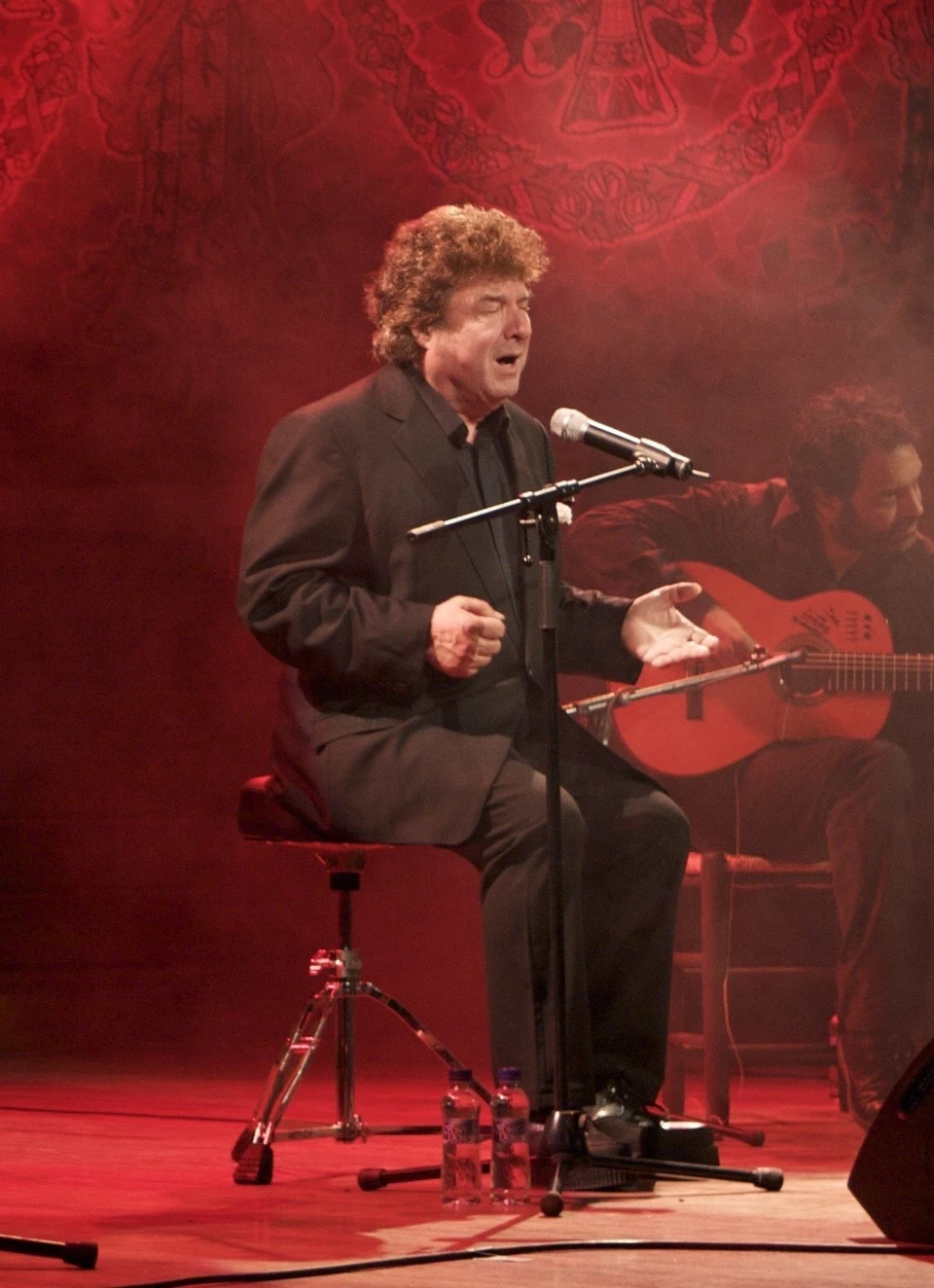
A voice from Granada’s Albaicín
Enrique Morente Cotelo was born in Granada on 25 December 1942 and died in Madrid on 13 December 2010. The Albaicín belongs to the beginning of his story. His work offers a route into flamenco singing through records, documented performances and the cultural memory of his home city.
The Andalusian government’s account of his career emphasises his knowledge of traditional cante and his openness to other musical traditions. It records his National Music Prize in 1994 and the Medal of Andalusia awarded in 2005. Those distinctions help place the career; listening lets you explore it for yourself.
Begin with the cante
Before Omega, explore Homenaje a Don Antonio Chacón, released in 1977. RTVE’s biographical account identifies it as a return to traditional cante and an important reference in his discography. It is a useful starting point for hearing the singer’s relationship with an earlier flamenco repertoire.
Use an authorised recording and read its credits. Follow the length of a sung phrase, the guitar’s response and the spaces between them. You need not recognise every style immediately. Returning to the same passage can reveal details that a first listen passes over.
Poetry becomes a singing voice
Homenaje flamenco a Miguel Hernández, released in 1971, is an early reference for Morente’s work with poetry. His later projects also drew on Federico García Lorca. Poems offered texts to shape through singing, with rhythm and phrasing adding another way to encounter the words.
Choose one piece, read the credited poem and listen again. If you are learning Spanish, a short translated passage can help you follow the meaning without interrupting the music. Keep the poet, singer and accompanying musicians in view when reading the credits.
Omega: The 1996 meeting with Lagartija Nick
Omega brought Morente together with the Granada rock band Lagartija Nick in 1996. The album connects flamenco and rock with poems by Lorca and songs by Leonard Cohen. RTVE’s radio programme revisits the project with Antonio Arias, a participant in its creation.
Begin with a track, then hear another recording from Morente’s earlier work. Notice how the instrumental setting changes around the voice. This comparison gives you two points within a career, without asking one record to represent everything the singer did.
Watch the archive and connect with Granada
RTVE preserves a 1997 concert with Lagartija Nick at Pirineos Sur. Canal Sur’s archive also documents rehearsals and performances connected with Omega. These are opportunities to see Morente himself performing, alongside the musicians named in each recording.
Granada’s municipal tourism site introduces his connection with the city. Combine that context with our Granada guide when planning a visit. Morente died in 2010, so a present-day event bearing his name may celebrate his legacy with other performers. Check the actual line-up, date and venue before buying a ticket.
Questions before you go
Can I attend an Enrique Morente concert?
Enrique Morente died in 2010. You can explore his own performances in recordings and archives. Current tributes feature other performers, whose names should appear in the programme.
What is a useful first recording?
Homenaje a Don Antonio Chacón offers a route into his traditional cante. Omega, with Lagartija Nick, opens another side of his career through rock, Lorca and Leonard Cohen.
Which city is central to his story?
Granada, particularly the Albaicín, is central to his upbringing and cultural legacy. The municipal tourism page provides a starting point for that connection.
Sources & further reading
- Junta de Andalucía: Career and Medal of Andalusia decree
- RTVE: Biographical account and early recordings
- RTVE Radio: Omega with its participant Antonio Arias
- RTVE archive: Morente and Lagartija Nick at Pirineos Sur, 1997
- Canal Sur archive: Omega rehearsals and performances
- Granada City Council: Enrique Morente and the city