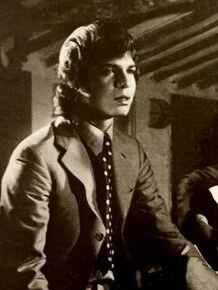
The singer from San Fernando
José Monje Cruz, known as Camarón de la Isla, was born in San Fernando, Cádiz, in 1950. A Gitano singer whose childhood was closely connected with flamenco, he became one of the defining voices of its modern history. He died in 1992. His story belongs to recordings, archives and cultural memory, rather than a current concert itinerary.
He grew up in a neighbours' courtyard beside his father's forge, in a home where his mother sang. This places the public figure in a particular social setting. De la Isla points back to San Fernando, traditionally La Isla: A city that connects the artist's biography with its own streets.
A partnership with Paco de Lucía
Between 1969 and 1977, Camarón and Paco de Lucía recorded nine albums together, documented by the guitarist's foundation. The collaboration provides a substantial starting point for understanding both artists. Singing and guitar were developing side by side, rather than one simply serving as background to the other. Their shared catalogue precedes the later experiments usually associated with Camarón.
Madrid's Torres Bermejas tablao also belongs to his story. Moving from Cádiz to a professional stage in the capital brought Camarón into another flamenco environment. His career connects the family and local setting of his childhood with the working life of tablaos, and then with an expanding discography.
Why his career matters
Camarón's later records changed the instrumental setting around his voice, bringing flamenco into contact with sounds associated with rock, jazz and popular music. The interest is in that meeting. His career connects a singer formed within a flamenco environment with projects willing to alter the surroundings of the cante, while keeping the singer at their centre.
The catalogue helps explain why flamenco performances can sound so different. A voice with guitar, an expanded band and an orchestral recording each tell part of the story. Following one singer across those settings brings variety into focus, without separating the earlier collaborations from his later work.
La leyenda del tiempo: The 1979 turning point
La leyenda del tiempo, released in 1979, brought new instrumental colours into Camarón's recorded work. The title draws on Federico García Lorca, linking a literary text with a musical project that initially met resistance from some traditionalist listeners. RTVE's archive presents it as a turning point in the development of contemporary flamenco.
Start with the title song and return to it after another track, rather than trying to grasp the whole album at once. Attend to how the sung phrase meets the instrumental pulse. If Spanish is unfamiliar, learning the title's meaning is a modest first step towards its literary world. Voice, text and ensemble offer three different routes into the same recording.
Soy gitano: A later chapter
Soy gitano followed in 1989, a decade after La leyenda del tiempo. Its recording involved the Royal Philharmonic Orchestra, adding another setting to the singer's work. It is a useful second album because it brings the biography forward: Camarón's career did not stop at the controversy or reputation of one record, however often that record is mentioned.
Give the title track a separate session. Follow the recurring sung phrase, then the instrumental layers around it. Comparing the albums is a way to hear a career across time. Begin with whichever title attracts you and later return to the earlier duo records.
A cultural route in his home city
San Fernando's official Camarón route connects places such as his birthplace, the interpretation centre and Venta de Vargas, alongside other sites in his life and legacy. It gives a visit to the Cádiz area an artist's perspective. A modest street or family setting can carry as much biographical meaning as a performance venue.
The interpretation centre provides context; an archive performance shows the singer himself; a present-day recital introduces other artists continuing the practice of cante. These are complementary experiences. A tribute honours Camarón, while a recording preserves his own performance, and each has a place in exploring his legacy.
Questions before you go
Can I attend a Camarón concert?
Camarón died in 1992. His own performances survive in recordings and archives; live tributes feature other artists.
Where can I explore his life in Spain?
San Fernando's official Camarón route connects places associated with his upbringing and legacy in the Cádiz area.
Start listening to Camarón
Return to the recording after reading the guide and follow the voice, the lyrics and the musicians around it.
This section contains affiliate links. As an Amazon Associate I earn from qualifying purchases.
La leyenda del tiempo
Camarón de la Isla
A route into Camarón’s singing through an album that brings flamenco together with Lorca’s poetry and influences from rock and jazz.
About the recordingCheck the edition, language, format and delivery options on Amazon before buying.